Studies
Metal, machinery, technology and science
The school of marine engineering offers study programmes in metal turning, steel constructioni, marine engineering and practical engineering that prepare students for their journeyman’s examination. Students can add general academic courses to their studies to complete a matriculation examination parallel to their vocational studies.
The studies include both practical and theoretical courses. Practical courses are taught in Háteigsvegur, Reykjavík and in Flatahraun, Hafnarfjörður. Theoretical studies are available as on site and distance learning.
Study Programmes
- Marine Engineering
- Aircraft Maintenance Engineering
- Earthworks
Studies in Marine Engineering are divided into four levels A, B, C and D. The qualifications are cumulative as the study progresses. The study programme is a combination of practical training in metal technology, engine theory, refrigeration technique, electro technics and related theoretical courses.
The students are trained in using machinery and technical equipment in specialised workshops and engine simulators. The studies are based on a recognized curriculum and are in accordance with IMO quality standards.
Engineer officers and Chief engineer officers work on ships, in power plants and elsewhere where an extensive knowledge of machinery and technical equipment is required. After completing the School of Marine Engineering and an accredited training programme, students are qualified for positions all over the world on vessels of all sizes and types; fishing vessels, cargo ships as well as large passenger ships.
The school also offers an engineer programme towards international qualifications and matriculation, metal technology and forging.
Aircraft maintenance engineering offers many job opportunities all across the country as well as abroad. Graduates from Technical College Reykjavík have gone on to work for Icelandair, the Icelandic coast guard and Air Atlanta, among others. The field offers many opportunities for continuing education and expanding your knowledge.
All the courses are taught in Iceland but the course language is English. Students are divided into classes and the study programme consists of three phases: academic courses, practical courses and an internship. After completing their courses in school, students complete a payed apprenticeship.
Classes start in the fall and only 25 students are admitted per year.
Aircraft maintenance engineering is taught in english.
Read more here
Earthworks is a study programme for those preparing to work or currently working for ground contractors in various specialities. These include landscaping, excavating, earth moving, groundwork, road preparation, surface levelling and more.
The programme gives students insight into the procedures, techniques and technologies needed to work in this industry. The programme focuses on practical projects, both written and hands on, tailored to the individual student and in line with the requirements of the industry.
The programme emphasises the latest technology and hands on learning. Students train using state of the art simulators on the campus in Hafnarfjörður as well as further practical training in collaboration with ground contractors.
The programmes teachers are assisted by industry specialists who also take part in the development of the studies.
Welcome
Welcome to the School of Marine Engineering
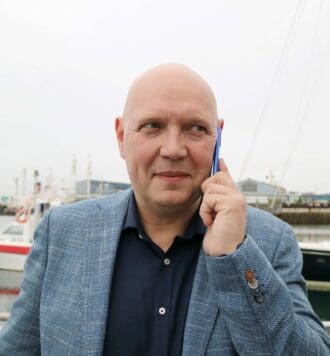
Ship control is a vibrant and creative job.
Greetings from the headmaster
The school of marine engineering welcomes students who want to acquire a practical high quality technical education. Various job opportunities await students on completing the studies.
Studies at the school of Marine Engineering take place in Háteigsvegur as well as in Hafnarfjörður (Flatahraun and Gjótuhraun).
We look forward to seeing you.
Víglundur Laxdal Sverrisson
- Skólastjóri Véltækniskólans og Skipstjórnarskólans